The History of Reinforcement Learning
In the early 2010s, an introduction to reinforcement learning would often begin with a feedback loop between an agent and an environment, followed by examples from robot control and games. That picture is still useful, but the field now reaches much farther. Reinforcement learning (RL) grew from animal-learning experiments into a general framework for sequential decisions and, more recently, a tool for aligning and improving large models.
Before we begin our code practice, let us take a few minutes to briefly review this history spanning over a century. Understanding these milestones will help you better grasp why modern RL algorithms are designed the way they are today.
1. Enlightenment and Foundation: From Psychology to Mathematical Framework (1890s - 1950s)
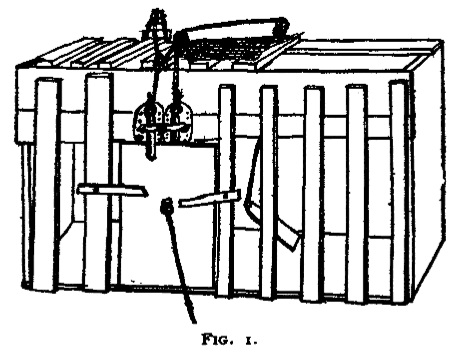
The idea of reinforcement learning did not originate in computer science, but rather in psychology and neuroscience. In 1898, psychologist Edward Thorndike conducted the famous "Cat in a Puzzle Box" experiment and proposed the Law of Effect: if a behavior leads to a good outcome, that behavior is reinforced; conversely, it is weakened. This is the very origin of "trial-and-error learning."
Over half a century later, with the rise of cybernetics, this biological instinct began to be rigorously formalized mathematically. In 1957, Richard Bellman introduced the Markov Decision Process (MDP) and the Bellman Equation [1]. He abstracted real-world sequential decision problems into a precise mathematical object using a five-tuple , where is the set of states, is the set of actions, is the transition probability, is the reward function, and is the discount factor. Within this framework, the agent's goal is to find a policy that maximizes the expected long-term discounted cumulative reward:
To measure "how good a policy is," Bellman introduced the concept of the value function — represents the expected cumulative reward obtainable from state when always following policy . Among all possible policies, the optimal one corresponds to the optimal value function . Bellman proved that this function satisfies a beautiful recursive relationship — the Bellman Optimality Equation:
This equation carries profound meaning: the optimal value of the current state is equal to the "immediate reward" plus the "discounted expected optimal value of all future possible states." It transforms a seemingly infinite sequence of decision problems into a solvable equation — this is the origin of the dynamic programming idea. This marked the formal establishment of a solid theoretical foundation for reinforcement learning.
2. Theoretical Formation and Temporal Difference and Model-Free Learning (1980s - 1990s)
Although Bellman's dynamic programming is mathematically flawless, it has two critical limitations in practical applications. First, it requires a complete model of the environment — that is, the transition probabilities and the reward function must be known in advance. However, in reality, a robot does not know how wide the corridor is after pushing a door, and an AI does not know where the opponent will move next in a game. Second, it suffers from a severe "curse of dimensionality" — the Bellman equation requires solving for each state individually, and the size of the state space grows exponentially with the complexity of the problem. For example, in Go, the number of board states is approximately , which is far beyond the capacity of the entire universe's atoms to store.
To enable agents to learn in unknown environments and without relying on complete state tables, pioneers began to seek new approaches.
- In 1988, Richard Sutton, hailed as the "father of reinforcement learning" (RL), systematically proposed Temporal Difference (TD) learning [2]. It cleverly combined Monte Carlo sampling with the bootstrap property of dynamic programming, allowing agents to learn on the fly without a complete environment model. The core update rule of TD is extremely simple:
Here, is called the TD error. Intuitively, it measures the discrepancy between the "new estimate" and the "old estimate" — if the situation is better than expected after taking the next step (), the value of the current state is increased; otherwise, it is decreased. This "learning as you go" mechanism is one of the core ideas of modern RL.
- In 1989, Chris Watkins introduced Q-learning in his doctoral dissertation [3]. This model-free, off-policy algorithm remains one of the standard starting points for reinforcement learning. Its update rule is
Q-learning directly estimates the action-value function : the expected return of taking action in state and then continuing from the next state. Once this table has converged, the agent can act greedily by selecting in each state.
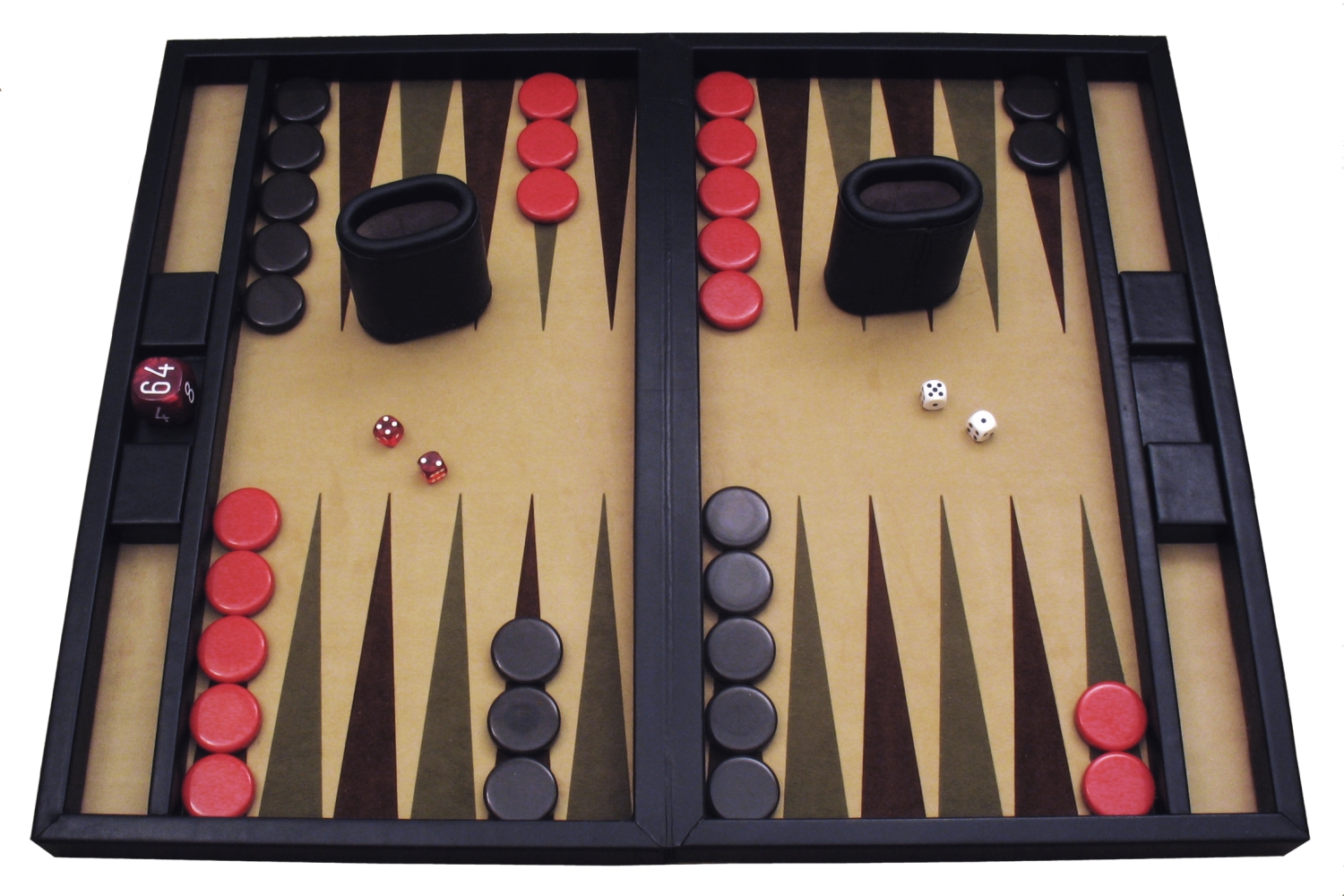
- In 1992, IBM researcher Gerald Tesauro developed TD-Gammon [4]. By combining TD learning with a shallow neural network, the program reached a level comparable to the world's strongest backgammon players. It became an early demonstration of reinforcement learning with neural function approximation.
In 1998, Sutton and Barto published the influential classic textbook Reinforcement Learning: An Introduction [5], marking the formal establishment of the theoretical framework for modern reinforcement learning.
3. Deep Revolution and When RL Meets Deep Learning (2013 - 2019)
After the turn of the 21st century, although the theory of reinforcement learning continued to mature, traditional table-based methods and linear function approximations were fundamentally incapable of handling the high-dimensional and complex inputs (such as images) present in the real world. It was not until the breakthrough of deep learning that reinforcement learning truly entered its "golden age."
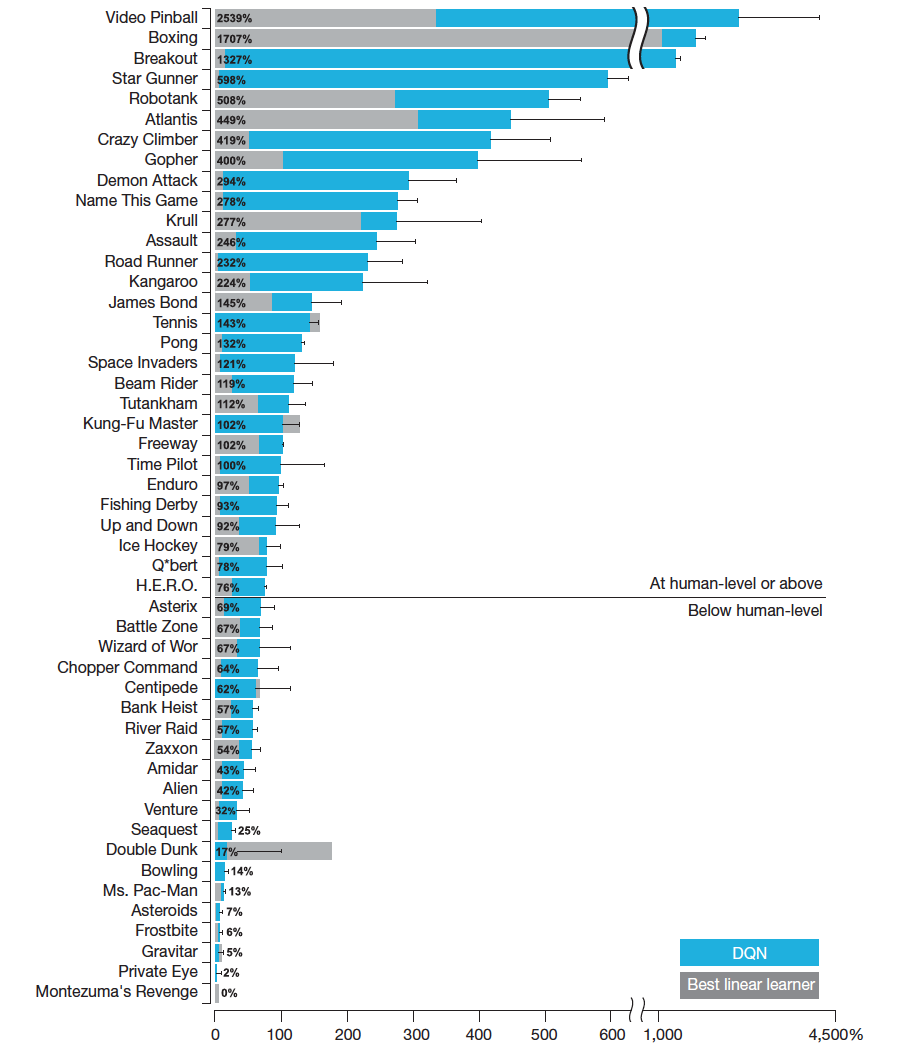
- 2013, DeepMind introduced the Deep Q-Network (DQN) [6], which for the first time seamlessly integrated deep neural networks with reinforcement learning, enabling AI to learn and surpass human performance in multiple Atari arcade games by merely observing screen pixels. This marked the official beginning of the era of deep reinforcement learning. The core idea of DQN is to use a neural network $ Q(s,a;\theta) $ with parameters to approximate the Q-value function. Its loss function is defined as:
Here, denotes the parameters of the target network, which is copied from periodically rather than updated at every step. The dataset is the experience replay buffer. Target networks and experience replay reduce the instability caused by combining bootstrapped Q-learning targets with a changing neural network.
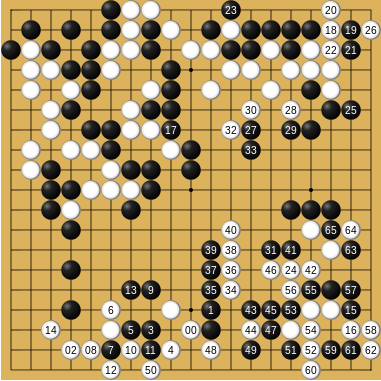
- 2016, a year destined to be etched into history. DeepMind's AlphaGo [7] combined deep reinforcement learning with Monte Carlo tree search to defeat the Go world champion Lee Sedol with a score of 4:1. This event not only shocked the world but also brought RL into the public eye for the first time in an extremely impactful manner.
- In 2017, OpenAI proposed Proximal Policy Optimization (PPO) [8]. PPO limits each policy update with a clipped surrogate objective, making policy-gradient training easier to tune while retaining good sample efficiency:
Here, represents the ratio of new to old policy probabilities, is the estimate of the advantage function, and is typically set to 0.1~0.2. The clipping mechanism ensures that the policy does not deviate too far from the old policy after each update — this is akin to adding a "safety barrier" to the learning rate. Due to its ease of tuning and excellent robustness, PPO quickly became the de facto standard algorithm in industry. Subsequently, OpenAI used a large-scale distributed system based on PPO, OpenAI Five, to defeat the world champion team in DOTA 2.
4. The Age of Large Models and New Paradigms in Alignment and Reasoning (2020s to Present)
Just as people were beginning to think that the application scope of reinforcement learning (RL) was mainly limited to games and robot control, the rise of large language models (LLMs) has given RL a new mission — alignment and reasoning.
- In 2022, OpenAI released ChatGPT after a line of work on reinforcement learning from human feedback (RLHF) [9]. In the standard pipeline, pairwise human preferences train a reward model , and PPO then optimizes the language-model policy against that learned signal:
The KL penalty discourages the policy from moving too far from the reference model while pursuing a high reward.

- In 2023, Stanford University and others proposed DPO (Direct Preference Optimization) [10]. Researchers found that the cumbersome training of reward models could be bypassed, and a simple classification loss function could be used to fine-tune a language model directly on human preference data. The loss function of DPO is directly derived from the objective of RLHF:
where (winner) and (loser) are the human-labeled "good answer" and "bad answer," respectively, and is the sigmoid function. This formula elegantly eliminates the implicit reward model in RLHF — the model simply needs to learn that "the probability of a good answer increases relatively, and the probability of a bad answer decreases relatively." DPO significantly lowers the engineering barriers of RLHF and quickly swept through the open-source community.
- From 2024 to 2025, reasoning models such as OpenAI o1 and DeepSeek-R1 [11] brought reinforcement learning back to the center of model training. DeepSeek-R1-Zero showed that, on tasks with objective checks such as mathematical correctness or code execution, a strong base model can develop long reasoning traces through RL without an initial SFT stage. Its GRPO (Group Relative Policy Optimization) algorithm removes the critic network used by PPO and estimates advantages from the relative rewards of several responses to the same prompt. For a prompt , it samples and normalizes their rewards:
Then directly optimize the policy using the clipped objective:
This lightweight architecture does not require an additional Critic network, and instead uses the relative ranking between the same set of responses to drive learning, making it feasible to perform pure RL reasoning at scale on large clusters.
5. Industrial Explosion with the GRPO Family, Reasoning Models, and Agents (2025 - 2026)
If 2024 was the period of conceptual popularization of RLHF and GRPO, then the years 2025 to 2026 mark the stage where RL truly enters an industrial explosion. Three things happen simultaneously: rapid evolution of the GRPO algorithm family, reasoning models becoming an independent product category, and Agentic RL entering production.
5.1 GRPO Improvement Family and Four Independent Evolutionary Paths
After the R1 paper, open-source teams and industrial laboratories proposed several GRPO variants, each addressing a different training failure mode:
- DAPO (ByteDance and Tsinghua University, March 2025, arXiv:2503.14476) introduced asymmetric clipping, dynamic sampling, token-level loss, and overlong-sample filtering. These changes target excessive reasoning length and inefficient sampling in R1-Zero-style training.
- Dr.GRPO (Liu et al., 2025, arXiv:2503.20783) showed that standard-deviation and length normalization can bias the update. Removing them produced more stable training in the reported experiments.
- GSPO (Zheng et al., Qwen3 team, July 2025, arXiv:2507.18071) moved the importance-sampling ratio from individual tokens to the whole sequence, improving the stability of RL training for MoE models.
- CISPO (MiniMax, June 2025, arXiv:2506.13585) clips importance-sampling weights rather than discarding token updates, preserving gradient contributions from more tokens.
- VAPO (ByteDance Seed, April 2025, arXiv:2504.05118) reintroduced a value model and showed that a critic can still be useful for long chain-of-thought reasoning.
By early 2026, the question of "which GRPO variant to use" has transformed from an open question into a selection decision table.
5.2 Reasoning Models and Formal RL
OpenAI's o1, o3, and o4 series established test-time compute scaling as another way to improve model performance. Competitive Programming with Large Reasoning Models (arXiv:2502.06807) showed that complex test-time strategies can emerge from end-to-end reinforcement learning rather than being specified by hand.
At the same time, DeepMind's AlphaProof and AlphaGeometry 2 reached silver-medal performance at the 2024 International Mathematical Olympiad. Their use of formal languages and search connected reinforcement learning with machine-checkable proofs. DeepSeek-Prover-V2 (arXiv:2504.21801) continued this direction with Lean 4. A proof assistant serves as a strict verifier: a proof either passes the checker or it does not.
5.3 Agentic RL Enters Production
Another development was the expansion of RL from single-turn question answering to long-horizon tasks:
- The Information reported large new investment in RL environments, reflecting how environment construction had become a production concern rather than a small research utility.
- Meta's SWE-RL (arXiv:2502.18449) trained a model on software-evolution data and evaluated it on repository-level issue resolution.
- Claude Computer Use and OpenAI Operator moved model actions into browsers and desktop interfaces.
- ByteDance's UI-TARS-2 (arXiv:2509.02544) and Zhipu's AutoGLM explored multi-turn GUI interaction and asynchronous rollout systems.
5.4 The Rise of Chinese Laboratories
Chinese laboratories have taken on a unique position in this wave of RL industrialization. DeepSeek has the highest transparency—it publicly disclosed that the V3 pre-training used 2.664M H800 GPU hours, and R1-Zero used 128K GPU hours.
See the Stanford CRFM Foundation Model Transparency Index for a broader comparison of public disclosures.
Qwen3 adopts GSPO for large-scale RL, while Kimi K2 introduces the MuonClip optimizer to improve training stability (technical report).
ByteDance's public work spans DAPO, VAPO, UI agents, and generative-model RL. Zhipu's GLM releases likewise explore curriculum design and agentic RL (GLM-4.5 report).
Step3-VL by Starry Sky proposes PaCoRe parallel coordinated reasoning, opening up another path for test-time scaling.
In November 2025, Anthropic published "Natural Emergent Misalignment from Reward Hacking" (arXiv:2511.18397), bringing reward-hacking research into a new stage: misaligned behavior that emerges naturally during RL training became an active security topic.
In the same year, Microsoft introduced Reinforcement Pre-Training (RPT) (arXiv:2506.08007). RPT moves reinforcement learning into the pre-training stage and therefore changes the usual boundary between pre-training and fine-tuning. DeepMind's AlphaEvolve (May 2025) combines language models, evolutionary search, and automatic evaluators, showing how learned proposals and executable feedback can be placed in the same search loop.
Across these changes, the recurring problem remains the same: an agent acts, receives feedback, and adjusts future decisions. What changes from one generation to the next is the scale of the state and action spaces, the source of the feedback, and the machinery used to collect experience.
Summary
The path from Thorndike's maze to Bellman's equation, from Atari DQN to DPO and GRPO, shows how the same idea has moved across very different systems: an agent acts, observes feedback, and changes its future decisions.
The chapters that follow make this history concrete. We begin with small environments where every update can be inspected, then move toward the algorithms and training systems used for modern language-model alignment.
References
Bellman, R. (1957). A Markovian Decision Process. Journal of Mathematics and Mechanics, 6(5), 679-684. ↩︎
Sutton, R. S. (1988). Learning to predict by the methods of temporal differences. Machine Learning, 3(1), 9-44. ↩︎
Watkins, C. J. C. H. (1989). Learning from Delayed Rewards. PhD Thesis, King's College, Cambridge. ↩︎
Tesauro, G. (1995). Temporal difference learning and TD-Gammon. Communications of the ACM, 38(3), 58-68. ↩︎
Sutton, R. S., & Barto, A. G. (2018). Reinforcement Learning: An Introduction (2nd ed.). MIT Press. ↩︎
Mnih, V., et al. (2013). Playing Atari with Deep Reinforcement Learning. arXiv preprint. ↩︎
Silver, D., et al. (2016). Mastering the game of Go with deep neural networks and tree search. Nature, 529(7587), 484-489. ↩︎
Schulman, J., et al. (2017). Proximal Policy Optimization Algorithms. arXiv preprint. ↩︎
Ouyang, L., et al. (2022). Training language models to follow instructions with human feedback. arXiv preprint. ↩︎
Rafailov, R., et al. (2023). Direct Preference Optimization: Your Language Model is Secretly a Reward Model. arXiv preprint. ↩︎
DeepSeek-AI, et al. (2025). DeepSeek-R1: Incentivizing Reasoning Capability in LLMs via Reinforcement Learning. arXiv preprint. ↩︎